A founder has a clear idea: a subscription-based tool that helps small clinics manage appointments, or a project management app for design agencies. The idea is solid, the market need is real, and the next question is who should build it.
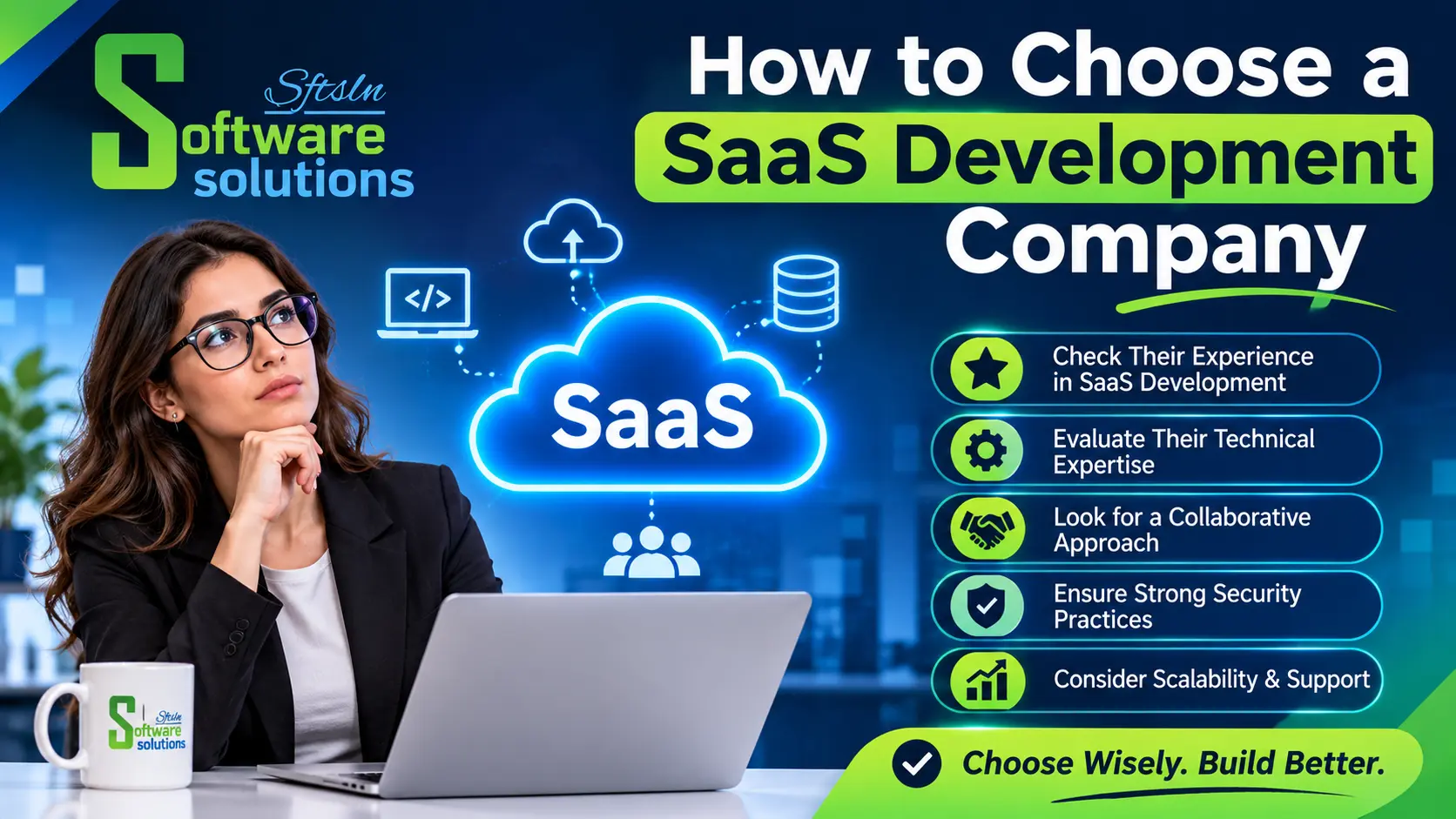
Many businesses treat this as a hiring decision based on price and portfolio screenshots. That is risky. A good SaaS development company needs to understand more than code. It has to understand product requirements, architecture, security, subscription workflows, scalability, and the long-term upkeep of a live product. If you are comparing a custom software development company against freelancers or other agencies, this guide gives you a practical framework for evaluating each one.
What Is SaaS Development and How Is It Different From Regular Web Development?
Software as a Service (SaaS) is software delivered over the internet. Customers log in through a browser or app and pay a subscription, or a usage-based fee, instead of installing anything.
A business website mostly presents information. A conventional web application, such as an internal booking tool, serves one organisation. A SaaS product serves many customers at once, each with its own accounts, settings, and data.
That brings extra requirements:
- Multiple customer accounts or organisations
- User registration and authentication
- Subscription plans and billing
- Role-based access permissions
- Customer dashboards
- Data management and reporting
- Cloud hosting and application monitoring
- Ongoing product updates
Take a subscription-based CRM. Hundreds of businesses might use the same platform, but each must see only its own contacts, deals, and reports. Getting that separation right is a design decision made early, not a feature added later. This is why SaaS application development is a different discipline from building a standard website.
Step 1 — Define Your SaaS Product Requirements
Before approaching any SaaS product development company, get clear on your own product. Vague briefs produce vague proposals, and comparing them becomes nearly impossible.
Work out:
- The problem your product solves
- Your intended customer segment
- Essential features for the first release
- Expected user roles and permissions
- Your subscription or pricing model
- Required third-party integrations
- Expected usage and growth
The most valuable exercise is separating MVP features from enhancements. Suppose you are planning an online inventory management platform. Version one might need product management, stock tracking, user accounts, and basic reporting. Advanced analytics, demand forecasting, and multi-warehouse support can follow once real customers show what they need.
Step 2 — Evaluate Technical Expertise and SaaS Development Experience
A capable partner should be comfortable across:
- Frontend and backend development
- Database design and optimisation
- API development and integrations
- Cloud infrastructure
- Authentication and user management
- Subscription and payment integration
- Application testing and deployment
- Performance monitoring
Ask them to show relevant experience through portfolio examples, product demonstrations, or a technical walkthrough of how they would approach your product. Building attractive business websites does not automatically prove an ability to build a complex SaaS platform, so ask specifically about multi-user, subscription-driven products. Verify claims rather than taking them at face value.
Step 3 — Understand SaaS Architecture and Multi-Tenant Development
Architecture is among the most consequential choices in custom SaaS development. It shapes security, cost, performance, and how easily the product can grow.
Multi-tenancy means multiple customers (tenants) share the same application infrastructure while their data and access stay appropriately separated. Topics worth discussing include:
- Tenant registration and management
- Data isolation between customers
- Shared versus separate database approaches
- User roles and permissions
- Tenant-specific configurations
- Application performance
- Database scalability
Multi-tenant architecture is not the only valid design. A product serving a few large enterprise clients with strict compliance needs may be better served by separate environments per customer. The right answer depends on security requirements, compliance, operational complexity, and expected growth. A good partner explains the trade-offs and tells you how the proposed design will support future expansion.
Step 4 — Check Security and Data Protection
SaaS platforms hold other businesses’ data, so a security failure harms your customers as well as you. Ask how the development team will handle:
- Secure authentication
- Role-based access control
- Tenant data isolation
- Encryption where appropriate
- Secure API communication
- Database access restrictions
- Backup and recovery procedures
- Security testing
- Monitoring and incident response
A reliable provider can explain, in plain language, how customer data is protected and how access is controlled. Before signing, also discuss data retention, deletion, backup responsibilities, and any privacy requirements that apply to your market. These conversations are far easier before a contract than after launch.
Step 5 — Evaluate Scalability and Cloud Infrastructure
Your product may start with a handful of customers and grow quickly. Cloud-based software development makes growth easier, but only if the foundations are planned. Ask about:
- Cloud hosting and infrastructure selection
- Database performance
- Application response times
- Traffic management
- Monitoring and logging
- Backup and disaster recovery
- Deployment and update processes
- Infrastructure cost management
Scalability should match realistic requirements. Building for millions of users on day one adds cost and complexity without benefit. Ask how the team would handle growing users, data volume, and activity, and at what point they would revisit the design.
Step 6 — Check Subscription Management and Third-Party Integrations
A SaaS product is not just features behind a login. Subscription-based software development also covers:
- Subscription plan management
- Recurring billing
- Free trials
- Plan upgrades and downgrades
- Payment gateway integration
- Invoice generation
- Renewal notifications
- Failed payment handling
- Usage limits and feature access
An appointment booking platform, for example, might offer a basic plan limited to one location and a premium plan with SMS reminders. The system must enforce those limits and handle upgrades smoothly.
Also list the integrations you need, such as CRM platforms, accounting applications, email and SMS services, analytics tools, external APIs, and customer support systems. Document them early, because they influence architecture, cost, and timelines.
Step 7 — Review the Development Process and Project Management
A transparent process usually looks something like this:
- Requirement gathering and product discovery
- UI/UX design and prototyping
- Technical architecture planning
- MVP development
- Testing and quality assurance
- User acceptance testing
- Deployment and launch
- Documentation and handover
- Post-launch monitoring and improvements
Ask about milestones, demonstrations, feedback cycles, change requests, and how the team communicates. A clearly defined scope protects both sides, because it removes ambiguity about features, deliverables, and timelines.
Step 8 — Understand SaaS Development Costs and Pricing
There is no universal price for a SaaS product, and be cautious of anyone who quotes one without understanding your requirements. Costs are driven by:
- Number and complexity of features
- User roles and tenant management
- Multi-tenant architecture
- UI/UX design
- Subscription and payment integration
- Third-party APIs
- Security requirements
- Cloud infrastructure
- Testing and deployment
- Data migration
- Ongoing maintenance and support
The initial build is only part of the picture. Hosting, monitoring, updates, and support continue for as long as the product runs. Ask for a detailed proposal covering included features, exclusions, milestones, payment terms, infrastructure responsibilities, and maintenance costs. Treat any promise of guaranteed returns with scepticism.
Step 9 — Evaluate Post-Launch Maintenance and Technical Support
Launch is the beginning of a product’s life. Afterwards someone must handle:
- Bug fixes
- Security patches
- Database maintenance
- Performance optimisation
- Cloud infrastructure monitoring
- Application updates
- Subscription workflow improvements
- Technical support
- Feature enhancements
Ask whether maintenance is included in the proposal or covered by a separate agreement. Make sure support arrangements are clear and that you will receive technical documentation, so your product does not depend on one team’s memory.
Questions to Ask Before Hiring a SaaS Development Company
- Have you developed similar SaaS applications?
- How will you design the platform architecture?
- How will customer data be separated?
- How will subscriptions and recurring payments work?
- How will the application handle increasing user activity?
- What security measures will be implemented?
- Which integrations are included in the project scope?
- How will testing and quality assurance be handled?
- Who owns the source code and product documentation under the agreement?
- What maintenance and support arrangements are available?
- How are additional features and change requests priced?
- What happens if the business decides to change development partners?
Wherever appropriate, get the answers written into the proposal or agreement. Verbal assurances are hard to rely on later.
Common Mistakes to Avoid When Choosing a SaaS Development Partner
- Choosing on the lowest quotation alone. Compare scope, architecture, and support, not just the number.
- Confusing website experience with SaaS experience. Ask for relevant examples or a technical walkthrough.
- Ignoring tenant data isolation. Ask how it is designed and tested.
- Underestimating subscription management. Billing, upgrades, and failed payments need planning from the start.
- Building too many features before validating. Launch an MVP and learn from real users.
- Overlooking security and backups. Confirm the plan and responsibilities in writing.
- Leaving source code ownership undefined. Settle ownership and handover terms in the agreement.
- Ignoring hosting and maintenance costs. Budget for the product’s running costs, not just the build.
- Starting without a documented scope. A written scope prevents most disputes.
Finding the Right SaaS Development Partner
The right partner understands your product requirements, SaaS architecture, application security, integrations, scalability, and ongoing support, and can explain each in terms you understand. If you want to see how a team approaches projects like yours, you can explore the available SaaS development services and judge whether they fit your product and growth plans.
Conclusion: Choose a SaaS Development Partner for Long-Term Product Growth
Choosing a SaaS development partner comes down to a few things: product understanding, technical expertise, sound architecture, security and data isolation, scalability, subscription and payment functionality, transparent processes, and long-term support.
Start by documenting your product idea and identifying the essential MVP features. Prepare your questions, then compare proposals on scope, architecture, security, cost, and support rather than price alone. When you are ready to evaluate options, review the SaaS development services linked above and see how they match your requirements.