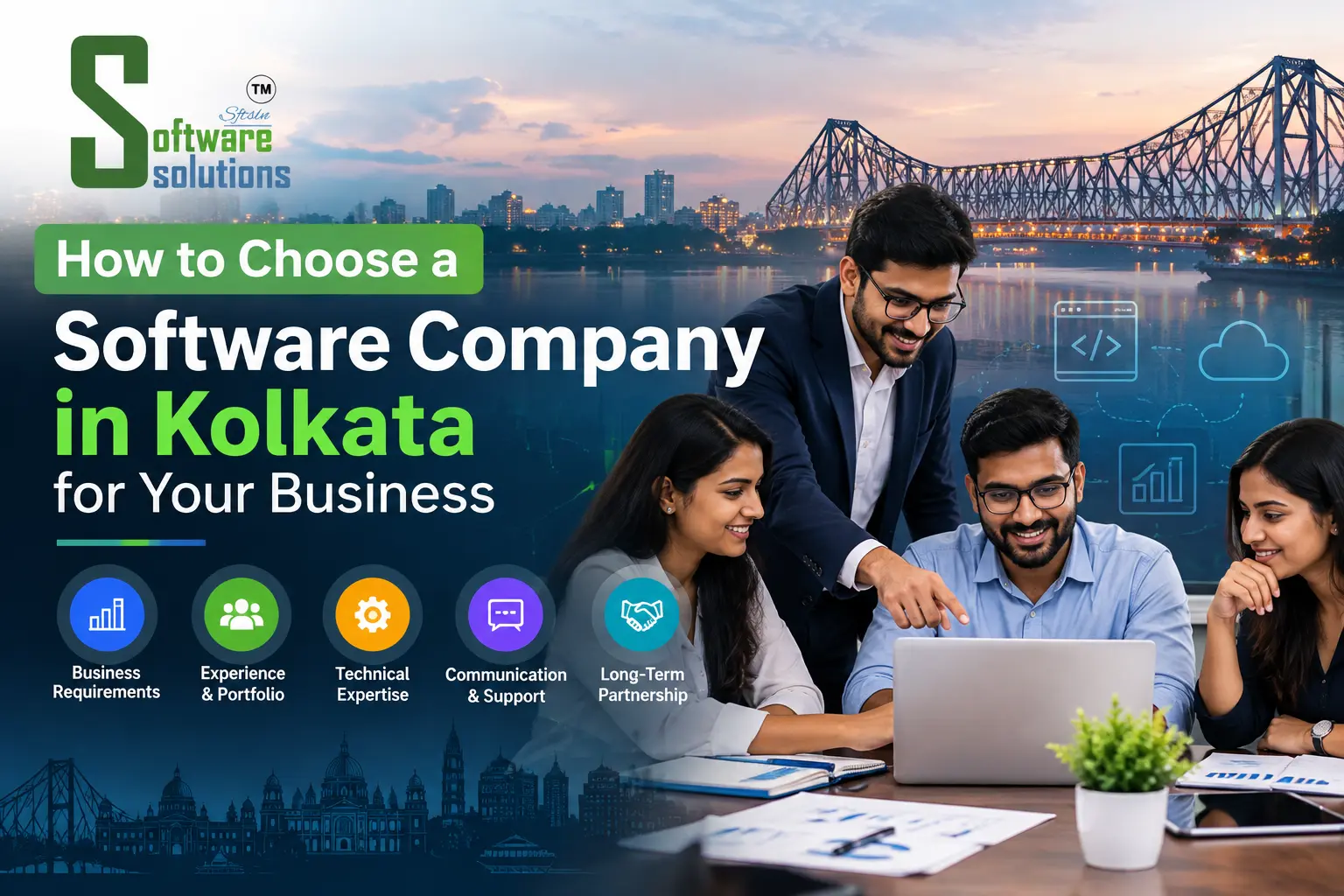
Search "software company in Kolkata" and you'll get a dozen names in about ten seconds. Every one of them has a clean website. Every one of them says they're experienced, reliable, and client-focused. None of that actually tells you who's going to do a good job for your specific business, and that's the real problem when you're trying to pick one.
Choosing well isn't about finding the company with the flashiest site or the longest list of technologies listed on their homepage. It's about finding one that actually understands your business well enough to build something you'll use every day, and that sticks around once it's live. Here's what's genuinely worth checking before you sign anything.
Why Choosing the Right Software Company Matters
Software isn't something you buy once and forget. It's something your business runs on, year after year, and it needs updating as your business changes and fixing when something breaks. Get this choice wrong, and you don't just lose the money you spent building it. You lose time, you lose momentum, and pretty often you end up paying someone else to fix or rebuild what should have worked in the first place. Get it right, and the software actually makes your business easier to run, instead of becoming one more thing your team quietly avoids using.
Understand Your Business and Software Requirements
Before you start evaluating anyone, it helps to be honest with yourself about what you actually need. What's slowing you down right now? Who's going to use this thing day to day? What does it need to talk to? You don't need a technical spec for any of this, just clarity on the actual problem. Walk into a meeting saying "we need software for our business" and you'll get vague proposals back. Walk in with a clear problem, even a simply worded one, and you'll get sharper, more useful conversations with everyone you talk to.
Check the Company's Experience and Portfolio
Ask to see real work, ideally for a business that operates something like yours does. "We've built CRMs, ERPs, and mobile apps" doesn't actually tell you much. What you want to know is whether they've solved a problem like yours before, what that project actually involved, and whether it's still being used today. If a company can walk you through a real example in detail, that tells you far more than any polished case study page ever will.
Evaluate Its Technical Expertise
Different projects need different skills. If you're building a CRM around a genuinely complicated sales process, you want people who've actually done that before, not a team that's mostly built simple websites. If your project involves connecting AI into how you already work, or setting up something like RCS messaging so customers get richer, more reliable updates, ask directly whether they've done that specific kind of work. General software experience doesn't automatically cover it. It's worth asking what they'd actually build differently for your business compared to a generic template. The answer tells you how much thought they've genuinely put into your problem.
Ask About the Software Development Process
A company with a real process, even a fairly simple one, is a good sign. Ask how they gather requirements, how a project gets planned and broken up, how often you'll actually see progress, and how they handle it when something needs to change mid-project. A company that can't describe its own process clearly is probably going to run your project the same way, without much structure and without much warning.
Compare Pricing and Project Estimates
Be a little wary of a quote that lands in your inbox almost instantly, before anyone's really dug into what you need. That kind of number is usually a generic guess, not a real one. A company that takes the time to actually understand your project before quoting, and explains what's included in that price, gives you something far more useful to compare against everyone else. Ask what happens if your requirements shift partway through, too. The answer to that question tells you a lot about what the rest of the relationship will actually feel like.
Check Communication and Project Management
This feels small until you're three weeks into a project and haven't heard a thing. Ask how they'll keep you updated, who your actual point of contact will be, and how quickly they usually get back to you. Honestly, how a company communicates during the sales conversation is a pretty fair preview of what it'll be like once you're their client and not just a lead.
Ask About Maintenance and Post-Launch Support
Software needs looking after once it's live. Bugs turn up, connected services update, your business changes in ways nobody quite planned for at the start. Ask directly what support looks like after delivery, what's actually included, and what a small change would cost you six months from now. If a company has no real answer here, that usually means they're planning to disappear the moment the invoice clears.
Review Client Experience and Case Studies
Beyond the portfolio, look for signs of a real, ongoing relationship with past clients rather than a string of one-off jobs. Long-term clients, repeat projects, and specific, detailed outcomes mean a lot more than a generic quote saying "the client was happy." If a company can point to a business that's come back to them for a second or third project, that's usually a good sign the first one actually worked.
Questions to Ask Before Hiring a Software Company in Kolkata
A short list worth bringing into any conversation:
- Can you walk me through a project you've built for a business like mine?
- What does your development process actually look like, step by step?
- What happens if my requirements change partway through?
- Who will I actually be talking to during the project, and how often?
- What does support look like after launch, and what would a small change cost later?
- Do you build and own the code, or does part of this depend on a platform I don't control?
How directly and specifically someone answers these questions tells you more than anything on their website will.
Final Checklist for Choosing a Software Development Partner
Before you sign anything, you should be able to say yes to most of these. They asked real questions about your business before pitching you anything. They showed you genuine past work, not just a list of capabilities. They explained their process clearly. Their pricing made sense and was actually explained, not just handed to you as a number. They were easy to reach and responsive while you were still deciding. And they had a real answer for what happens after launch. If most of that's true, you're probably looking at a genuine partner, not someone who'll vanish once the project ships.
Finding the Right Fit in Kolkata
We work with businesses across Kolkata on exactly this kind of software, including CRM software built around how your sales process actually works, AI tool development for businesses trying to automate something genuinely specific, and RCS messaging solutions for richer, more reliable customer communication. If you're comparing your options right now and want a straightforward conversation about what your business actually needs, come talk to us at Software Solutions. We're happy to be honest with you, even if that means saying a smaller first step makes more sense than the big one you had in mind.
Frequently Asked Questions
1. How do I choose the right software company in Kolkata for my business? Get clear on your own requirements first, then judge companies on real past work, a clear development process, transparent pricing, and a genuine plan for support after launch, not just a polished portfolio.
2. What questions should I ask before hiring a software development company? Ask about their experience with projects like yours, their development process, how they handle changing requirements, who you'll actually be talking to, and what post-launch support includes.
3. Is a cheaper software company always a worse choice? Not always, but be cautious of a very low quote given without much understanding of your requirements. It often means less testing, less support, or a much narrower scope than a more thorough estimate would cover.
4. Should I choose a software company with broad experience or one specialized in what I need? Ideally both. Broad experience helps, but specific experience with your kind of project, whether that's CRM, AI integration, or something else, usually produces a better result than general capability alone.